
Ask ten people what the best flooring for Wisconsin homes is and you will get ten answers, because the honest reply depends on the room, the subfloor, and how hard your winters hit it. In the Coulee Region we deal with a specific set of conditions: sub-zero cold snaps, humid Julys, snow-melt tracked through every entry, and basements that pull moisture in summer. The best floor is the one built for those realities, not the one that photographed nicest in a showroom two states south.
Why Wisconsin winters are hard on flooring
Two things wear on a floor here more than anywhere warmer. First is the humidity swing. Furnaces dry indoor air out to desert levels in January, then summer pushes it back up past 60 percent - and wood floors expand and shrink with every cycle. A floor installed without room to move will cup in August and gap in February. Second is what comes through the door: road salt, sand, and slush are abrasive and can etch or stain the wrong surface at the worst-used spot in the house.
None of this rules any material out. It just means the right choice changes from room to room, and the prep underneath matters as much as the product on top.
Best floors for main living areas
For kitchens, dining rooms, and great rooms, the two strongest picks are hardwood and rigid-core luxury vinyl. Hardwood flooring is still the longest-lasting, best-resale floor money can buy, and it handles our climate well as long as it is properly acclimated and kept above grade. If you want the wood look without any worry about spills or a cold slab underneath, luxury vinyl plank is waterproof, dimensionally stable through humidity swings, and warmer underfoot than tile.
For homes you plan to keep a decade or more, hardwood is usually worth the premium. For rentals, lake homes, walkout levels, or any space where water is a real risk, rigid-core vinyl earns its keep.
Best floors for entries, mudrooms, and basements
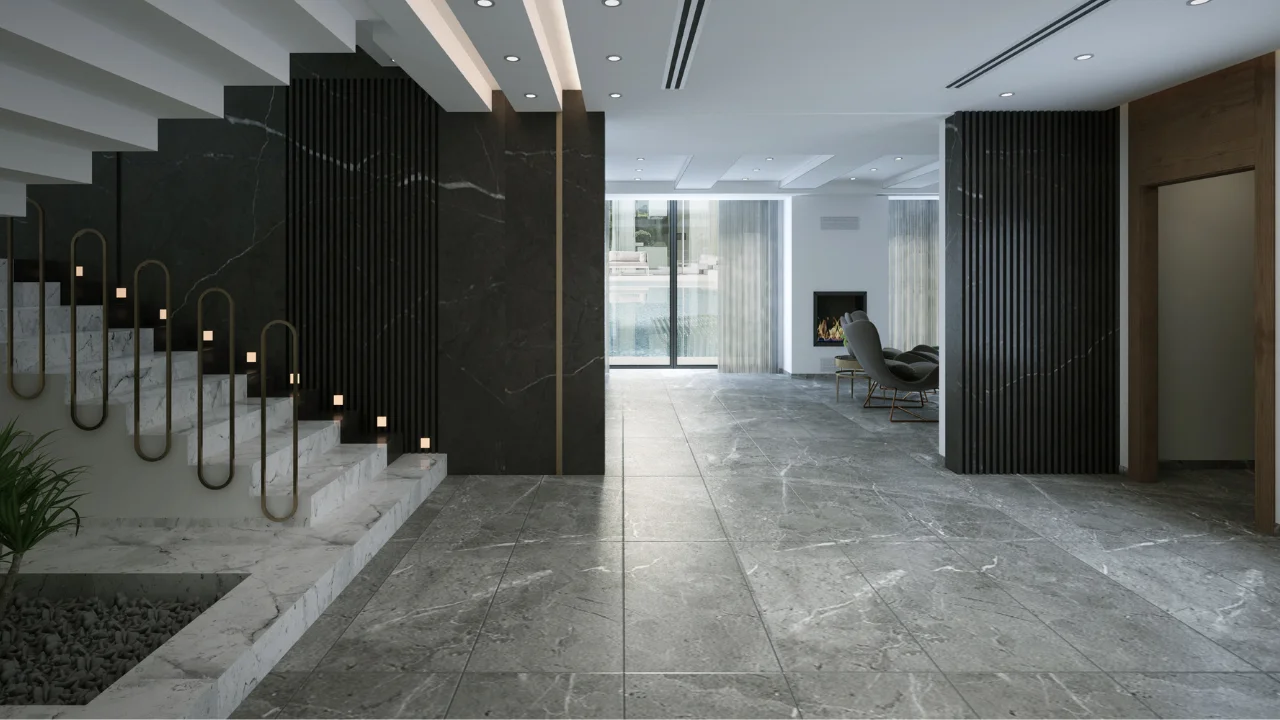
This is where Wisconsin flooring decisions really get made. The mudroom takes every gallon of melted snow that walks in the door, so it wants a surface that laughs at water and salt. Tile and stone is the classic answer - fully waterproof, nearly indestructible, and easy to pair with in-floor radiant heat so the floor is not shockingly cold in January. In a basement, where the slab pulls moisture and stays cool, epoxy and concrete coatings or waterproof vinyl are the safe calls. Solid hardwood does not belong below grade here, no matter how good it looks in the sample.
A quick room-by-room guide
- Main-floor living space, staying long term: hardwood, or luxury vinyl if you want zero water worry.
- Kitchen: hardwood if you keep spills wiped, luxury vinyl or tile if you would rather not think about it.
- Mudroom and entry: tile or luxury vinyl - both shrug off salt, slush, and sand.
- Basement: waterproof luxury vinyl or an epoxy floor coating, never solid hardwood.
- Bedrooms: carpet for warmth underfoot, or laminate on a budget in a dry room.
The floor matters less than the prep
The single biggest reason a floor fails in Wisconsin is not the product - it is what happened before it went down. Hardwood that was not acclimated to the room for a week will move. A slab that was never moisture-tested will telegraph damp into whatever sits on it. We measure moisture in the wood and the subfloor on every estimate, build acclimation time into the schedule, and design expansion gaps for how much our seasons actually move a floor. A mid-grade floor installed right will outlast a premium floor installed in a hurry.
How supply-only compares to the other two ways of buying a floor in the area is in flooring stores in La Crosse: showroom, supply-only or big box.
If you are weighing options for a specific home, the fastest way to a real answer is an in-home estimate - we bring samples, look at your subfloor and your entries, and tell you honestly which floor fits which room. We do this across the Coulee Region, including La Crosse and the surrounding towns.