
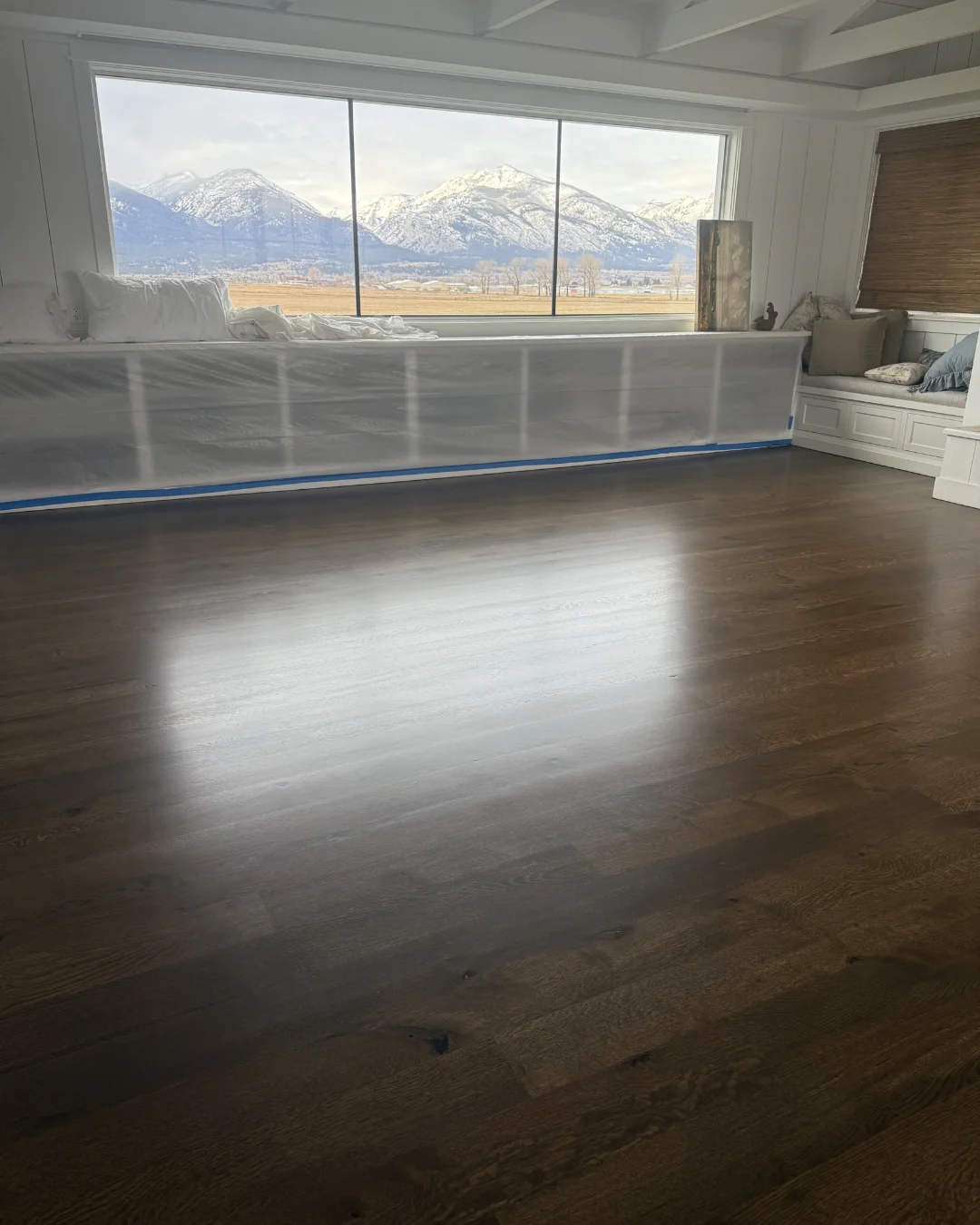
New floors and fresh paint are the two projects most often done together, and the question of which goes first comes up on almost every job. Ask a painter and you will hear paint first, so drips land on the old floor. Ask a flooring installer and you will hear floor first, so the walls do not get scuffed moving material in. Both are right about their own work and neither is thinking about yours.
Since we do both, here is the order we actually use, and why it is not one answer.
The short version
- Ceilings first, always.
- Walls painted before the new floor goes in.
- Floor installed.
- Baseboard, casing and any new trim installed after the floor, then painted last.
- Hardwood refinishing is the exception, and it depends on what is being painted.
That sequence exists because each step protects the one after it, and getting it backwards costs money in one of two ways: paint on a new floor, or a new floor dinged by the trades that come after it.
Why walls go before the floor
Painting walls is messy in a way people forget. There is sanding and filling, there is dust, there are drips and roller spatter, and there is the ladder. All of that happens over whatever floor is in the room. If the room is being painted, it is far better for that floor to be the old one that is about to be torn out than the new one that just went in.
The other reason is the last inch at the bottom of the wall. With the old floor and old baseboard out, the wall can be painted right down to the subfloor with no cutting in, and the new baseboard covers the edge. Painting after the floor means masking the floor and cutting a line at the top of the base, which is slower and never quite as clean.
Why trim goes after the floor, and gets painted last
In most flooring projects the baseboard comes off or gets replaced. It has to, because the new floor changes the height and a floating floor needs an expansion gap covered at the wall. We covered the three ways that goes in do baseboards come off for new flooring. Whichever way it goes, the trim is installed after the floor, and once it is nailed and caulked it needs paint.
So the painter comes back, or the painting is scheduled in two visits: walls before the floor, trim after. The trim visit is small, the floor is protected with paper, and the result is a clean line at the top of a new baseboard on a new floor, which is the whole point of doing both projects at once.
If the baseboard is staying and only being reinstalled, it still usually needs touch-up where it was pried off, so the last visit rarely goes away entirely.
Ceilings first, whatever else happens
A ceiling is painted from a ladder with a roller over your head and it is the messiest paint in the house. It goes first, before the walls, before anything. If the ceiling is the only thing being painted and the floor is new, the floor gets covered wall to wall.
The refinishing exception
Hardwood refinishing breaks the rule, because it is not a floor going in. It is the existing floor being sanded and finished in place, and it produces dust and needs a clean, still room while the finish cures. We described what living through it is like in refinishing your floors while you live there.
Two workable orders:
- Paint the walls and ceiling first, let them cure, then refinish the floor. The walls get wiped of sanding dust afterward, which is quick on cured paint, and the floor is never exposed to drips. Trim gets painted last with the floor protected. This is our default.
- Refinish first, then paint everything with the floor fully covered. This works when the finish has had time to cure hard, and it is the order to use when the refinish is the urgent part. It carries the risk that every drip is landing on a brand-new finish, so the floor protection has to be thorough.
What does not work is painting walls in the days between sanding and the final coat, or painting anything while the finish is curing. Dust in wet finish and finish fumes in wet paint both show.
When one contractor does both
The sequencing problem is mostly a coordination problem. Two contractors each want the other to go first, each protects their own work, and the homeowner ends up scheduling the return visits. When the same company does the painting, the trim and the floor, the order above is just how the job is scheduled: walls one day, floor the next, base and trim paint at the end, one point of contact. That is also the model behind our full room remodels, where the floor, the paint and the trim are one scope with one fixed price.
Color decisions, in order
One more sequencing note. Choose the floor before the wall color, not after. A floor is the largest surface in the room and the one you will live with longest, and there are far more paint colors than floor colors. Pick the floor in your light, then the paint against it. How to actually choose a floor color covers the first half of that decision, and paint sheen, primer and how many coats covers the paint decisions that come after the color.
Planning yours
If a floor and a paint job are both on the list, the free in-home estimate is where we lay out the order for your rooms and price it as one job. Our flooring installation guide covers the floor side step by step, and a free estimate covers both.